
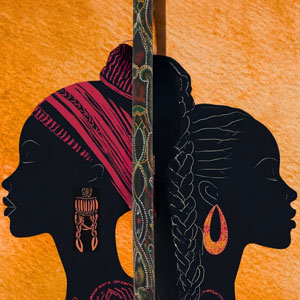
***Pegasus Theatre Chicago under the direction of ILesa Duncan brings an important and difficult conversation to the stage in its presentation of “In the Continuum” by Danai Gurira and Nikkole Salter. There are universal aspirations and dreams deep within our humanity to achieve happiness, security and fulfillment. And then there are the realities we ultimately face. The joy and positivity we see in this production were a necessary bulwark against the deep and deadly disappointments in life. Humor, at moments, is used as a useful release valve for anger at cultural and social inequities as seen through two women. One is an African and the other is an African-American. They exist in very different worlds, living with HIV and ultimately having to face their hardships on their own.
“In the Continuum” shares a pulse of life, that is both painful and complicated, but ultimately, one that seeks happiness and a kind of thirst for living despite the realities. Running an hour and a half with no intermission, the play follows Abigale (a beautiful performance by Georgerinna Farley), who is a married, working woman from Zimbabwe. Nia (played by Niara Taylor) is a single, attractive, typical teenage woman who grew up in an abusive home in South Central LA and is infatuated with a young man with whom she sees a bright future. Although Abigale and Nia are vastly different people, they ultimately have many things in common.
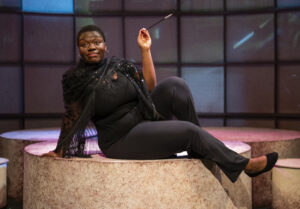
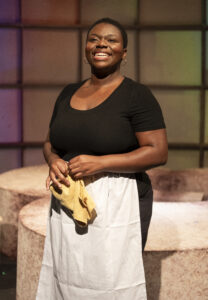
Playing multiple characters in a series of interconnected monologues, the lessons learned are our insights and sympathizing throughout the ups and downs. These two actors must carry us through many perplexing layers of character roles. They portray numerous people – mothers, friends, doctors and other health practitioners – weighing in on the prosperity or bleakness of their lives. In each monologue, a character speaks to someone unseen. We are challenged to understand the deeper implications behind the words. The resulting outcome is frightening, engrossing and mostly uncomfortable. But it is in their lead roles as Abigale and Nia that Farley and Taylor reveal their ultimate power to tell a story. Director Duncan is able to untangle many disparate threads here to make the distinct worlds of these two characters interdependent.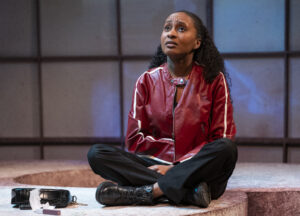
Georgerinna Farley brings warmth and earnestness to her performance. Through her various roles, she puts a compelling face on the many human tragedies facing the African continent. She is literally able to bend our perceptions, point out numerous absurdities and push forward the insurmountable challenges with a sense of optimism. Niara Taylor in her numerous roles reminds us of the many risks and fraught nature of being an urban teen. She is especially persuasive when faced with a payout from the family of her boyfriend to buy her absence.
The set is functional and effective with an interesting visual backdrop to create a sense of place separating Zimbabwe from South Central, and at times there is no distinct difference.
The show puts forth difficult subject matter. There are painful themes and many questions, which are still timely after 20+ years since the play debuted. And in many respects, we are moving backwards to address the issues and challenges presented here, including the intersection of misogyny, racism and bigotry, public health disparities, and the continued stigmatization around HIV/AIDS. And ultimately, there exists few choices, particularly for women, especially poor and disenfranchised women, due to economic inequality and failed domestic and global public policies.
Therein lies the problem and the core difficulty of this political play. There remains a continuum of silence or complacency around the subject of Black women living with AIDS. But the play did not leave me with much optimism when you consider the global context in which this is presented. Today, thanks to the pernicious policies advanced by the Republican party, many marginalized voices in this country are threatened or simply silenced. SCOTUS gutted the Voting Rights Act. Reproductive choice, no longer a fundamental right for women in the U.S., has been outlawed in many states. Federal subsidies for affordable healthcare through the ACA have been discontinued as millions no longer have easy access to healthcare as a result. And the Trump administration dismantled the life-saving US AID programs throughout the world.
Dialogue, such as “In the Continuum”, is always a promising step, but it is not enough to give us any continuum of hope.
 In the Continuum
 By: Danai Gurira and Nikkole Salter
Directed by: Ilesa Duncan
Featuring: Georgerinna Farley and Niara Taylor
Creative Team:
Shokie Tseumah (scenic/props), Liz Gomez (lights), Marquecia Jordan (costumes), Warren Levon (sound), Abboye Lawrence (projections), Chels Morgan (TIE consultant) and Carrie Hardin (dialects).
Through June 14, 2026
Schedule:
Thursdays: 7:00 pm
Fridays: 7:00 pm
Saturdays: 7:00 pm
Sundays: 2:30 pm
Location: Chicago Dramatists, 798 N. Aberdeen, Chicago
Tickets: $15-$35 General Admission: $35, Seniors $25, Students (ages 21 and under): $15
Box Office: www.pegasustheatrechicago.org or https://ci.ovationtix.com/216/production
Group sales may be arranged by contacting boxoffice@pegasustheatrechicago.org
To see what others are saying, visit www.theatreinchicago.com, go to Review Round-Up and click at ” In The Continuum”
photos by Michael Brosilow




More Stories
“Dead Girl’s Quinceanera”
“Dial M For Murder”
“A Midsummer Night Scream” reviewed by Frank Meccia