
 *****/*****For the past five years, the Opera Festival of Chicago has quietly become one of the city’s cultural treasures. Its mission is to present the finest Italian opera while introducing audiences to lesser-known masterpieces, and with each season, it has continued to exceed expectations.This year, the company has taken on what many, myself included, consider the greatest opera ever written—Giacomo Puccini’s La Bohème.
Since I was a teenager, when my parents first introduced me to opera, La Bohème has remained my favorite. More than fifty years later, after seeing it in opera houses large and small—from the Lyric Opera of Chicago to the Metropolitan Opera, from La Scala to the Cincinnati Opera—I can honestly say this production stands proudly alongside them.
Last year I discovered just how perfect the North Shore Center for the Performing Arts is for opera. The acoustics are exceptional, allowing every voice to fill the theatre naturally without overwhelming the audience.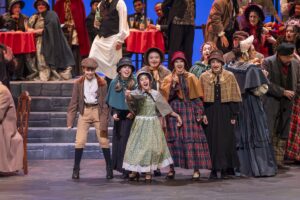
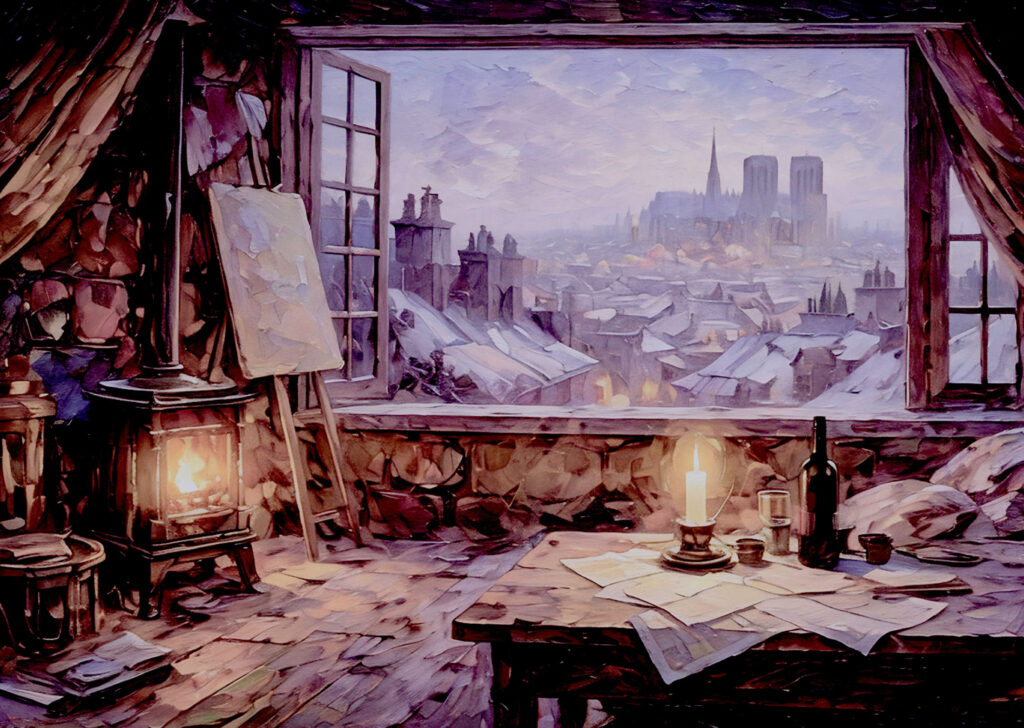
Set in the Latin Quarter of Paris during the 1830s, La Bohème follows four struggling artists chasing their dreams while the poet Rodolfo falls hopelessly in love with the fragile seamstress Mimì.
Nathan Granner, as Rodolfo, and Alexandra Razskazoff, as Mimì, were nothing short of magnificent. Having both performed these roles at both the Lyric Opera and the Metropolitan Opera, they brought tremendous experience to the stage. Their voices blended beautifully, and their chemistry made you believe completely in their tragic love story. Every duet was filled with warmth, tenderness, and heartbreak.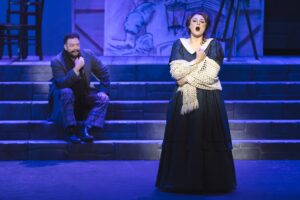
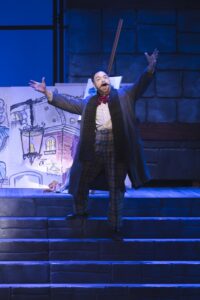
Equally impressive was the secondary love story between Marcello, wonderfully portrayed by Kenneth Stavert, and the flirtatious Musetta, sung by Catherine Samartin. I must admit I initially questioned whether Ms. Samartin fit the traditional image of Musetta, a role often performed by a more statuesque soprano. Within minutes, however, she erased all doubts. Her commanding stage presence, beautiful voice, and spirited performance made her an outstanding Musetta.
Jonathan Wilson brought charm and energy to Schaunard, while Anthony Reed gave Colline warmth and dignity. Every principal singer delivered performances worthy of a major international opera house.
Under the baton of Sir Emanuele Andrizzi, the fifty-piece orchestra was superb. Rich, expressive, and beautifully balanced, it easily matched the quality one expects from much larger opera companies.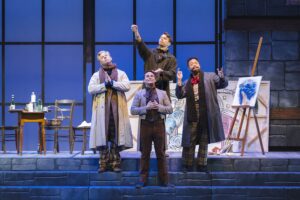
Director Sasha Gerritson masterfully coordinated a cast of more than seventy performers, creating a production that now ranks among my five favorite productions of La Bohème. Every scene flowed effortlessly, and every emotional moment landed with tremendous impact.
One of the evening’s greatest triumphs was its staging. Stage manager Hannah Zizza-Stanfield orchestrated scene changes with flawless precision. Scenic designer Shane Cinal cleverly expanded the stage with stone stairways and multiple playing levels, while projected views through the windows gave remarkable depth to every setting. It was difficult to imagine another way to accommodate such a large cast so effectively.
Costume designer Bill Morey recreated nineteenth-century Paris beautifully, while makeup designer Errin Austin deserves special praise. As Mimì’s illness progressed, Austin’s makeup subtly transformed Alexandra Razskazoff until, in the heartbreaking final scene, she truly appeared to be fading away.
A particularly memorable touch came during Act III, when real snow gently fell across the stage. It created one of the evening’s most magical moments—although I must admit those of us seated near the front could actually feel the chill!
Behind every great production stands an army of people the audience never sees. More than fifty members of the backstage crew made certain every set change, lighting cue, costume change, and technical element worked perfectly. Their contribution deserves tremendous recognition.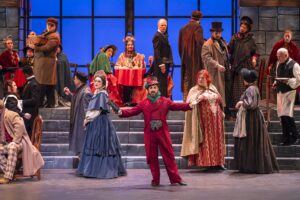
The Opera Festival of Chicago continues to prove that world-class opera doesn’t require world-class ticket prices. If you’ve ever wanted to experience grand opera, there may not be a better opportunity.
 Remaining performances of La Bohème are :
July 1 at 7:30 p.m. and July 5 at 2:30 p.m.
The festival is also presenting Adriana Lecouvreur by Francesco Cilea on June 28 at 2:00 p.m. and July 5 at 7:30 p.m.
Tickets range from just $50 to $118, making this one of the finest bargains in opera anywhere.
The North Shore Center for the Performing Arts, located at 9501 Skokie Boulevard in Skokie, offers free parking.
phone 847-673-6300
For tickets and additional information, visit the Opera Festival- www.operafestivalchicago.org
If you have never experienced live opera before, let this be your introduction. The Opera Festival of Chicago has created a production of La Bohème that is beautiful, emotionally powerful, and worthy of standing alongside performances by some of the world’s greatest opera companies. It is simply unforgettable.
To see what others are saying, visit www.theatreinchicago.com, go to Review Round-Up and click at “La Boheme: Opera Festival of Chicago.


More Stories
“Dead Girl’s Quinceanera”
“Dial M For Murder”
“A Midsummer Night Scream” reviewed by Frank Meccia