
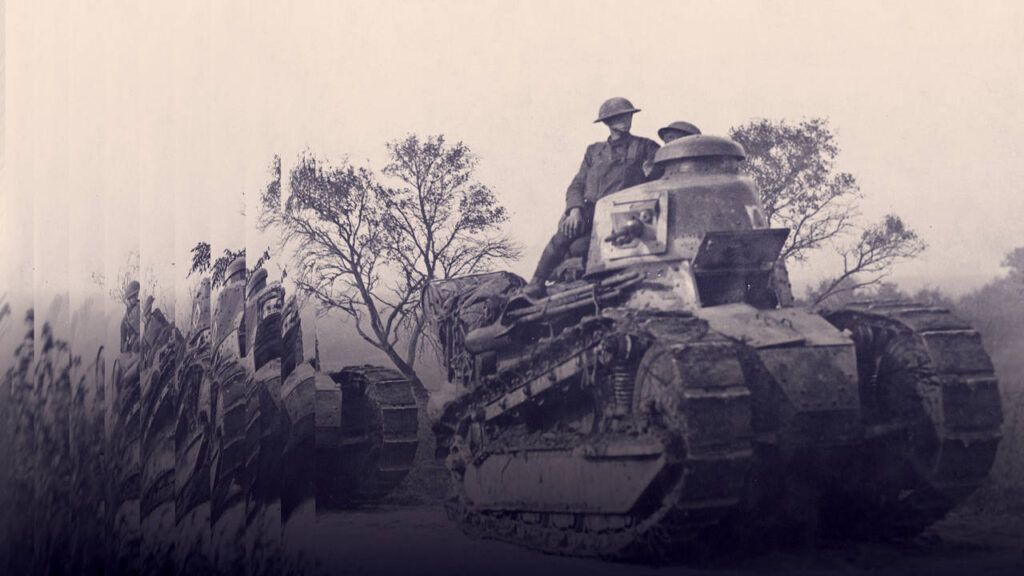
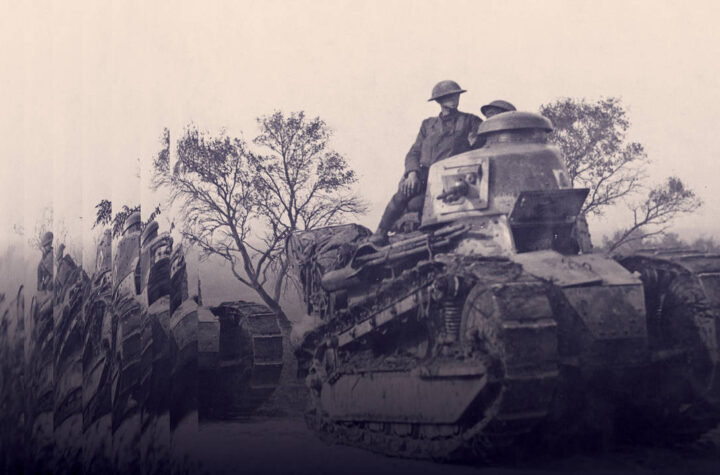
 **** Guarneri Hall, in downtown Chicago, offered a two-day chamber concert series, entitled “Revolutions”, which explored “the intersections of political, social, technological, and musical change at two pivotal moments in world history.” Wednesday evening’s program was on the music and politics of 1796 and focused on the first industrial revolution and the aftermath of the French Revolution. I attended the Thursday evening performance on the music and politics of 1918, with its emphasis on the Russian Revolution and the post-World War I time period. Today I learned first-hand how great compositions become even more powerful when audiences understand the reasoning behind them.
Artistic director Stefan Hersh introduced the concert, with the featured speaker being doctoral candidate Tanya Landau. She spoke about how the carnage of World War I influenced the music of the era and particularly how modernist composers Maurice Ravel, Igor Stravinsky, and Leoš Janáček were so affected. The talk emphasized the fragility of life and the fact that no one was able to stop the events of the day which often seemed spinning out of control. More to the point, major shifts in politics and society created a rift in how artists understood the environment surrounding them. This led to the need to reinterpret past and present with this new reality in mind. Specifically, the three composers broke away from past musical traditions and constructed new ideas to represent chaos, disorder, and irrationality. The falling away of traditional and romantic ways of understanding music thus gave rise to new forms, examples of which were on today’s program. Note that slide projections of each of the composers and excerpts of their music informed the audience of their various approaches.
Reflecting on the huge number of losses in France, Ravel created the clashing of different voices in his “Sonata (Duo) for Violin and Cello.” Dedicated “to the memory of Claude Debussy”, the push and pull of the music is intense and defies expectations. The Lent section is particularly vigorous, and the final Vif, avec entrain section starts out with a folk sense that turns into what sounds like crying. In all, this is an energetic performance of dissonance, where Ravel unravels what music is supposed to be. One thing we learned afterwards during the talkback is that this is an incredibly difficult piece to play.
Stravinsky took a different tack in response to the 1917 Russian Revolution. where he took on the perspective of a soldier encountering the dead in his “L’Histoire du Soldat” for violin, clarinet and piano. In five parts, he showcases individual vulnerability in the face of social transition. This is a composition meant for the theatre. The opening is a recognizable “Soldier’s March.” Now to quote from Linda Berna’s program notes: “As the soldier plays a meandering tune on his violin (“The Soldier’s Violin”), the devil notices and finagles the trade. Later, the soldier plays exuberantly (“The Little Concert”) after beating the devil at cards and regaining his instrument. The driving energy of the dances the soldier performs (“Tango – Waltz – Rag”) revives a dying princess who becomes his wife. In the final movement (“The Devil’s Dance”) the soldier flaunts his musical prowess, forcing the devil into a maniacal frenzy.”
Janáček, in his “Quartet No. 1 ‘The Kreutzer Sonata’”, was inspired by Tolstoy’s novel of the same name about a man who, suspecting his wife of infidelity, murders her in a jealous rage.” In her earlier talk, Landau explained that Janáček’s music as a whole placed the change in women’s social position front-row, center and contemplated a more modern sensibility of the female role in relation to family and society. Written for two violins, viola, and cello, “The Kreutzer Sonata” is a further expression of the need to draw women into contemporary life. Here the sadness of the first movement and the eeriness of the second are surpassed by the mordents/trills in the third movement that devolve into a long violin solo, with the fourth (Adagio) movement ending on a soulful and then disparaging note.
The performers were Chelsea Wang (piano), Nathan Meltzer and Eric Gratz (violin), Brian Hong (viola), Alexander Hersh (cello), and Katherine Jimoh (clarinet), all of whom excelled in their artistry and knowledge of music. What a treat it was to listen to them play together!
This was the first time I visited Guarneri Hall, and until now, I was unaware of this performance space, located in an office building in the midst of downtown Chicago. This intimate setting holds maybe fifty people in the audience, and there are no stairs: just an elevator to get to the third floor. After a talkback, a small reception followed, where we got to meet other members of the audience and the performers.
In sum, the program provided a historical context, which only broadened our understanding of the inspiration behind the various compositions. All throughout “Revolutions 2”, dissonances that seemed unpleasant became explicable in the context of war, revolution, and major social change. With the shift toward the development of the modern era in response to the collapse of the traditional world, composers looked to new inspiration and outlets for their work. Thus, the social and political events of the day, yet to be fully comprehended intellectually, were made artistically meaningful.
The two-day music series “Revolutions” took place on November 11-12, 2026, at Guarneri Hall, at 11 E. Adams Street, Third Floor, in Chicago.
Both performances took place at 6:30 p.m.
Tickets ranged from $10 to $50 for each performance.
For more information about this program, visit: https://guarnerihall.org/series/revolutions-social-and-musical/.
For a listing of their future offerings, go to: https://guarnerihall.org/events-calendar-guarneri-hall-presents/ and https://guarnerihall.org/events-calendar/.


More Stories
“Home for the Holidays”-
A Little “sunshine” with my massgae!
“Starstruck: An Out Of This World Immresive Experience in Chicago by Frank Meccia