
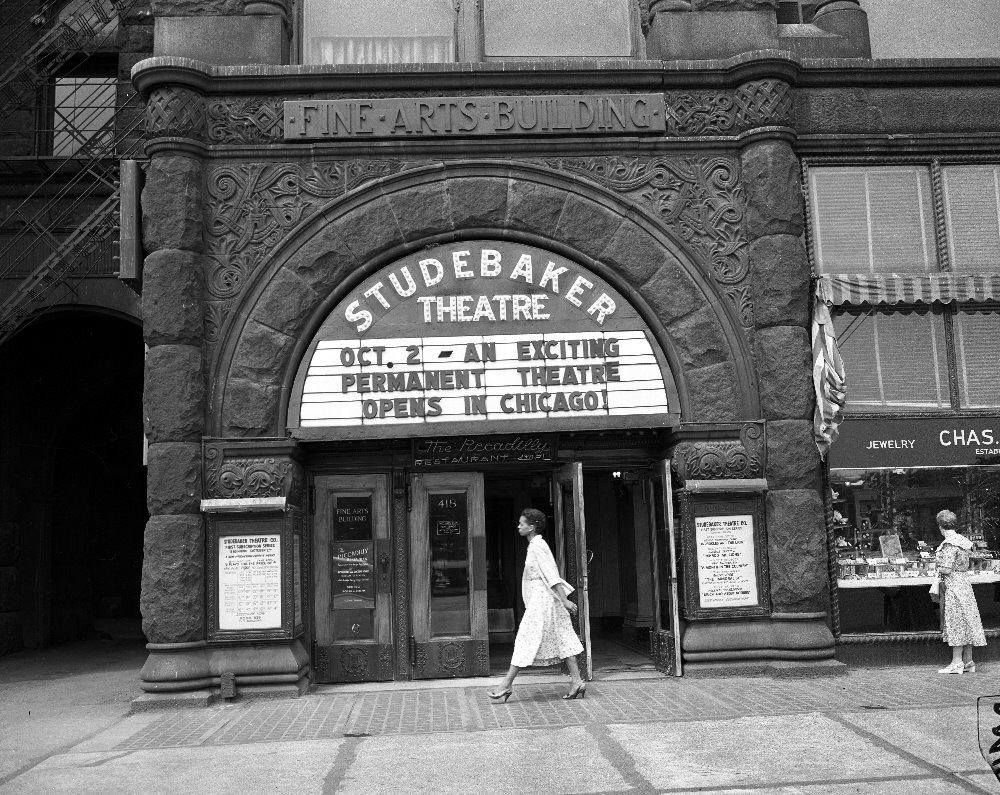
 ★★★★ Chicago Opera Theatre opened its 2026 season on Sunday, January 18, at the Studebaker Theatre with In America’s Embrace, a thoughtful and emotionally rich concert that explored the immigrant roots of what we proudly call “American music.” Spanning nearly two hours, the program featured works by composers who came to the United States seeking opportunity, freedom, and creative expression—and in doing so helped define the American musical voice.
Between musical sets, General Director Lawrence Edelson offered short reflections on the composers and artists represented in the program. His remarks focused on their journeys—many fleeing war, persecution, or political upheaval—and their ability to find artistic freedom in the United States, a freedom we are fortunate to still enjoy today. These interludes provided valuable historical context and reinforced the concert’s central theme: America as a place where new voices become part of a shared cultural identity.
The program included works by Kurt Weill, Erich Wolfgang Korngold, and, of course, Irving Berlin—arguably the composer most synonymous with American music. Berlin’s presence loomed large, as it should. For many of us of a certain age, his music is inseparable from memory and national identity. I vividly recall, as a Boy Scout in 1968, gathering around a black-and-white television to watch The Ed Sullivan Show when Irving Berlin sang his deeply personal version of what he believed should be the national anthem: “God Bless America.” That moment still resonates.
I did, however, take some exception to the statement that “no single recital could fully encompass the immigrant impact on American music.” While factually true, it felt unnecessary to qualify the point. Since the founding of this country in 1620, America has always been a nation of immigrants—people who came, assimilated, and became one. Even the Native Americans themselves were immigrants thousands of years earlier, arriving around 8000 B.C. in search of something new. Immigration is not an addendum to the American story; it is the story.
Musically, the concert sought to answer an intriguing question: How do you recognize something as American? Travel anywhere in the world, and Americans often give themselves away without saying a word. Perhaps it is confidence, openness, or emotional directness—qualities that were very much present in the performances.
Soprano Tracy Cantin, a graduate of the Lyric Opera of Chicago and an artist who has performed internationally with major orchestras, delivered a standout performance of “I Want Magic” from A Streetcar Named Desire. Her vocal control, emotional clarity, and stage presence made it clear why she is in such demand.
Baritone Schyler Vargas impressed throughout the afternoon, particularly with “Mi amor es” by Tania León. His expressive phrasing and warm tone brought depth and intimacy to the piece. Chicago audiences may recognize Vargas from his performance in Titanic at Marriott Theatre in 2025, but his operatic credentials—well established on the East Coast—are extensive and impressive.
Chicago native Alex Soare, a bass-baritone who has sung both locally and internationally, brought a commanding presence to Kurt Weill’s music. With his dark, penetrating eyes and vivid facial expressions, Soare captured the emotional complexity and bite of Weill’s songs with striking effectiveness.
Tenor Jordan Loyd, relatively new to Chicago since arriving in 2025, rounded out the cast. Already having appeared in two Chicago Opera Theatre productions, Loyd demonstrated why they is a welcome addition to the city’s operatic landscape, blending vocal strength with stylistic sensitivity.
All performances were unified under the musical direction and piano artistry of Laurie Rogers, who played all 23 selections with remarkable stamina and precision. Rogers, who serves as Music Director of Opera at the Peabody Institute, made her deep musicianship evident throughout the afternoon, providing both subtle support and dramatic propulsion where needed.
Chicago Opera Theatre has long distinguished itself by producing works rarely seen on main opera stages. This season began with Falstaff—not Verdi’s familiar version, but the much earlier Salieri opera written more than 300 years ago—a refreshing and enlightening choice.
The company’s next production will be Der Silbersee (The Silver Lake), a genre-defying masterpiece that blurs the lines between opera, operetta, and musical theater. Its Chicago premiere is scheduled for March 4, 7, and 8.
The season will conclude with the annual gala, Murder at the Opera, on Saturday, May 2.
Large opera houses may thrive on corporate sponsorships and massive subscriber bases, but companies like Chicago Opera Theatre survive on curiosity, dedication, and community support. If you are looking for a company that takes artistic risks and presents rare, thought-provoking works, consider subscribing or donating. In America’s Embrace was not just a concert—it was a reminder of how deeply immigration and artistic freedom are woven into the fabric of American music.
For further information, visit www.chicagooperatheatre.org.




More Stories
“The Brief Wonderous Life of Oscar Wao” reviewed by Paul Lisnek, Curtain Call Chicago
” To Be A Saint”!
“The Play That Goes Wrong”