
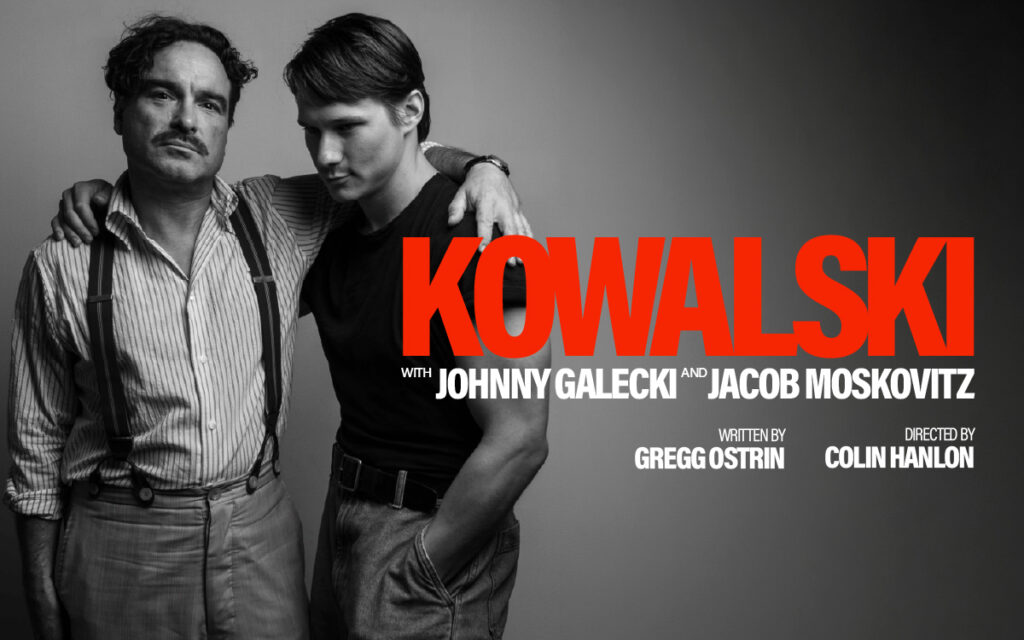
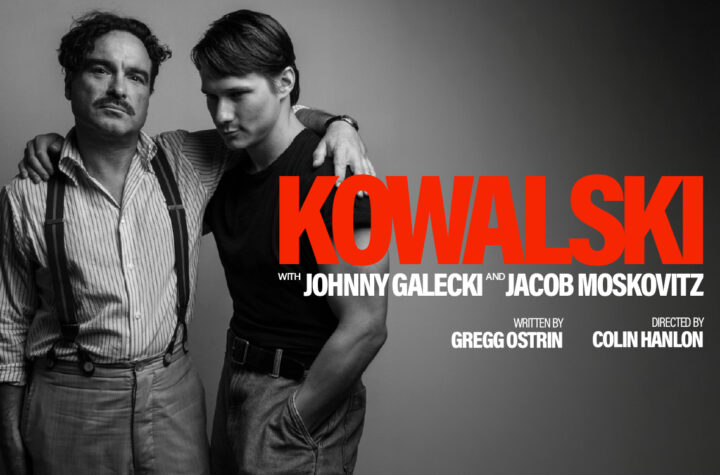
 ***** Does the name Tennessee Williams mean anything to you? How about Marlon Brando? How did these two gentlemen get together to change the lives of each and to enrich the lives of theater audiences ( and later movie-goers)? You will be able to see for yourself in the amazing play written by Gregg Ostrin, now on the stage at Lookingglass Theatre.
The 90-minute ( no intermission ) play is set over one night in 1947, and takes us into the initial meeting of playwright Tennessee Williams ( played to perfection by Johnny Galecki), who is trying to finalize his casting for “A Streetcar Named Desire”. A young no-name has been suggested by Broadway directorElia Kazan, and the young man is on the way to Provincetown for a reading/audition.
Ostrin has done a great deal of research and claims that the story he has penned is mostly factual, based on the memoirs of the people that were involved in this particular situation. He has, however, taken some theatrical liberties with the facts to make the story work better for the stage, adding a young woman, Jo ( deftly handled by Ellie Ricker), whom he uses as a buffer between Brand0 ( a strong character brought to life by Jacob Moskovitz).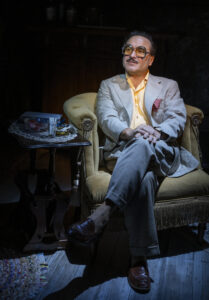
The banter between Galecki and Moskovitz, in a sort of duel of the minds, is powerful and, under the direction of Colin Hanlon, keeps us involved with these two men, and the added Jo for a great deal of time, with no boring segments. The story takes a look at one of theater’s most explosive plays and its creator and an actor who mumbled his way to stardom, creating characters like Stanley Kowalski and a host of others. While there is reference to Brando’s “mumbling”, I must say that Moskovitz speaks as clearly as a bell.
The other characters in this story are Pancho ( Reese Dos Santos), Williams’ live-in “playtoy,” and Margo Jones ( deftly handled by Alison Cimmet) a friend/director who is going over the new script in hopes of directing “Streetcar” on Broadway. The majority of the play is focused on the confrontation, or meeting of the actor and the playwright. It is at times like watching a tennis match as each takes their shot at the other, trying to make their individual points. It often feels even more like a swordfight, with one jabbing the other, and then the opposite. It worked to add the extra character to break this up and add a little more to their story.
This is a special theatrical moment for the theater lover to look at. It deals with ego, artistry, desire, ambition, pride, and most of all explains a great deal about how these two brought about something special for both the stage and the screen. There is a moment during the back-and-forth when Jo leaves the home and Brando runs after her, calling out her name. While we know that he is calling out Jo, Williams hears “Stella” ( and so did I) and the look on Galecki’s face says it all.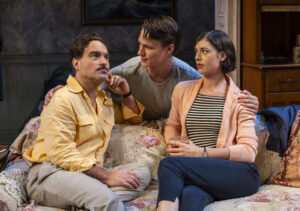
The technical aspects of this production are the icing on the cake. David Gallo’s set is powerful; the lighting (Jeff Croiter) , sound (Bill Toles) , costumes (Lisa Zinni), and props ( Amanda Herrmann) are perfect. The intimacy and fight direction by Chris Morgan are very realistic. Movement consultant Nancy Renee Braun evidently worked on the limited dance sequence, among other movements. The crispness of the show allows the 90 minutes to flow quickly, and at no time will you ever find yourself not enjoying each and every minute. This is another MUST SEE for Chicago, but is only here for a limited time!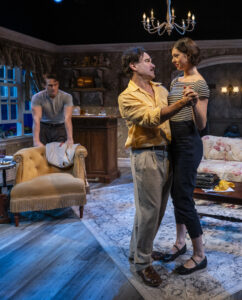
“Kowalski” will continue Thru – Oct 25th with performances as follows:
Tuesdays 7:00pm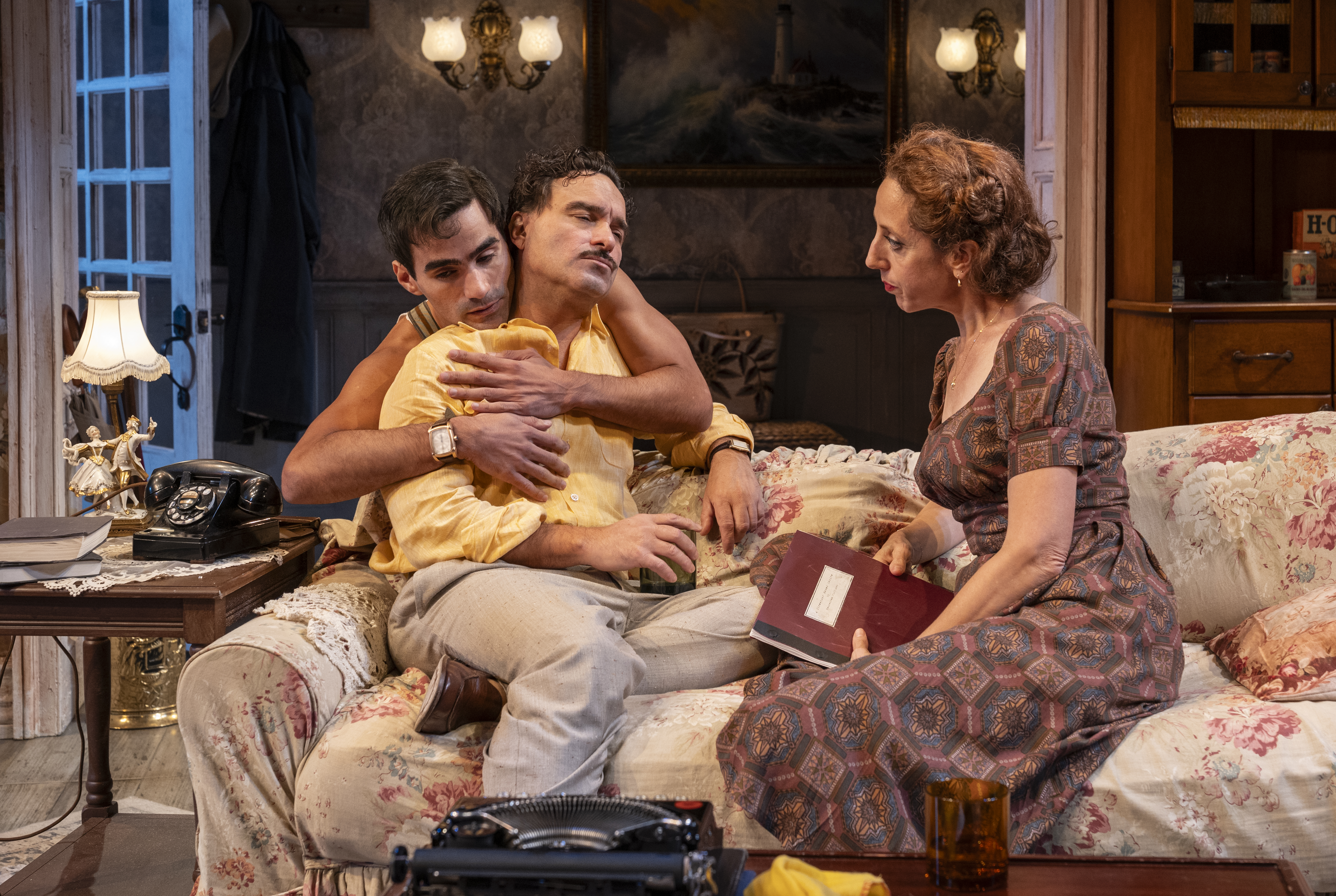
 Show Type: Drama
Box Office: 312-337-0665
To see what others are saying, visit www.theatreinchicago.com, go to Review Round-Up and click on “Kowalski”.




More Stories
“The Front Page”
“The Attic: Things I’ve Seen While Lying On My Back”
“Jekyll & Hyde” : The masterpiece from Division Street, Moves to the Broadway Playhouse!